Deeply Uses AI to Detect Abnormal Sounds, Boosting Industrial Site Efficiency

관리자
2025-03-22
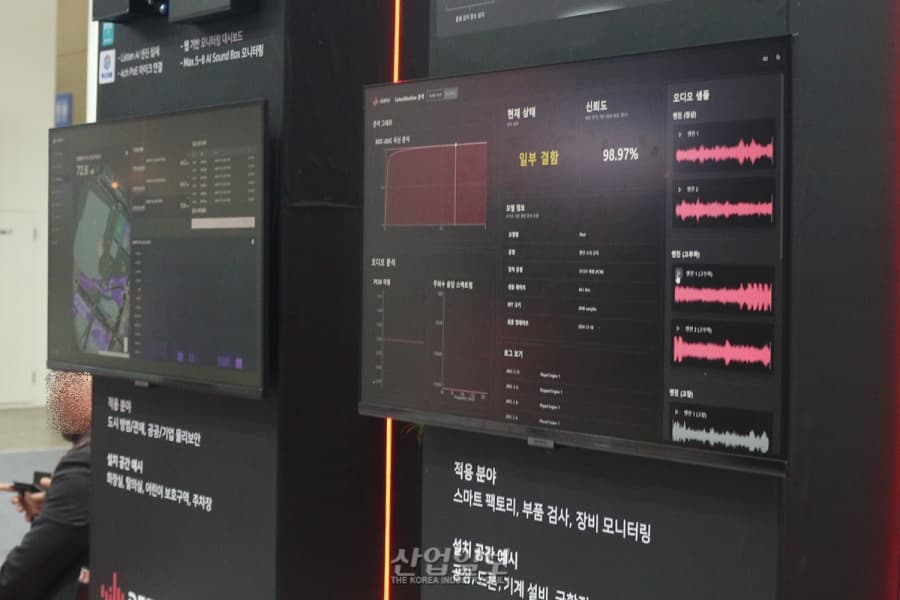
Manager Jungsoo Kim: “Our solution helps prevent industrial accidents and even enables non-destructive inspection of finished products.”
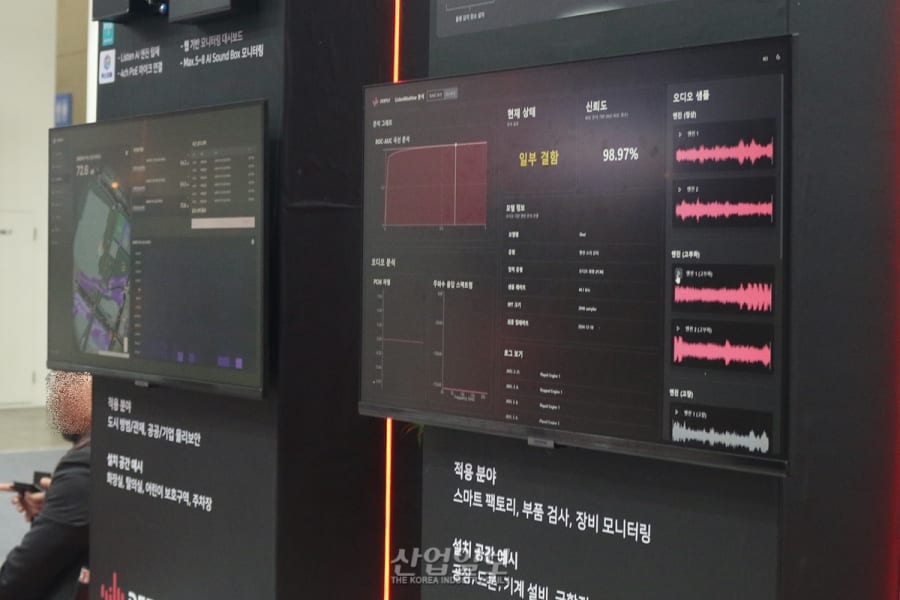
In manufacturing environments, where machinery and equipment generate constant noise, identifying specific abnormal sounds can be extremely challenging. However, failing to detect these sounds could lead to serious workplace accidents or go unnoticed during product quality checks.
At the SECON 2025 & eGISEC 2025 exhibition, held from March 19 to 21 at KINTEX in Ilsan, Deeply showcased its AI-powered solution that detects and analyzes abnormal sounds to assess equipment conditions. Founded in 2017, Deeply began as an audio AI startup analyzing baby cries to identify their cause, and has since expanded into industrial safety and manufacturing, detecting both emergency sounds and machine anomalies.
At this exhibition, Deeply introduced “Listen Machine,” a solution that uses AI to classify sounds and vibrations, analyze abnormal data, and support appropriate responses based on equipment condition. To make this possible, Deeply has developed technology that filters out unnecessary noise in industrial settings and utilizes machine learning and deep learning for sound and vibration-based anomaly detection. The company says this enables predictive maintenance, precise repairs, longer equipment lifespan, and reduced maintenance and safety costs associated with machinery failure.
Manager Jungsoo Kim explained, “We initially focused on emergency sound detection, but as the technology matured, we naturally transitioned into machine-focused solutions. Now, our technology can be used not only during production but also as a non-destructive inspection tool in the quality control phase, allowing detection even inside sealed products.”
He added, “Our solution can even detect fastening sounds, not just whether a machine is running. We’ve deployed it in sectors like rail (Korail), automotive, and home appliances across Korea.”