



- Motor noise
- Connector Clicks
- Assembly connector fastening sound
- Glass breakage and scratch
- Semiconductor component equipment wear sound
- Robot equipment abnormal sound
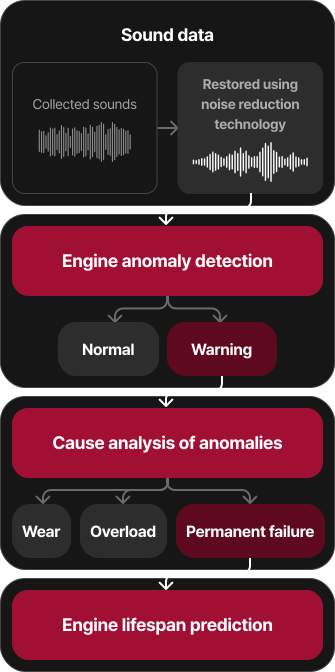
- Large engine drive-unit sound
- Pressure valve abnormal sound
- Normal motor sound
- Actuator
- GearNoise
- Grinding
- Vibration
- BearingNoise
- Harness Locking
- Cavitation
- NVH
Click Sound
Two connector fastening clicks
Compare connector clicks A and B against factory background noise.
- A
Connector click A
Compare the clear locking sound from normal fastening
- B
Connector click B
Separate soft fastening and missed-fastening possibilities
Motor Sound
Five motor stages from normal to defect
Compare how rotating equipment sound moves from normal operation into anomaly stages on one waveform baseline
- 000%
Normal motor sound
The reference sound from normal rotation
- 0125%
Early anomaly sound
Small friction signals begin to appear over the normal tone
- 0250%
Mid anomaly sound
Repeated noise and rotational deviation become clearer
- 0375%
High-risk anomaly sound
A rough pattern stands apart from the normal range
- 04100%
Maintenance review sound
An abnormal sound that may require maintenance or replacement
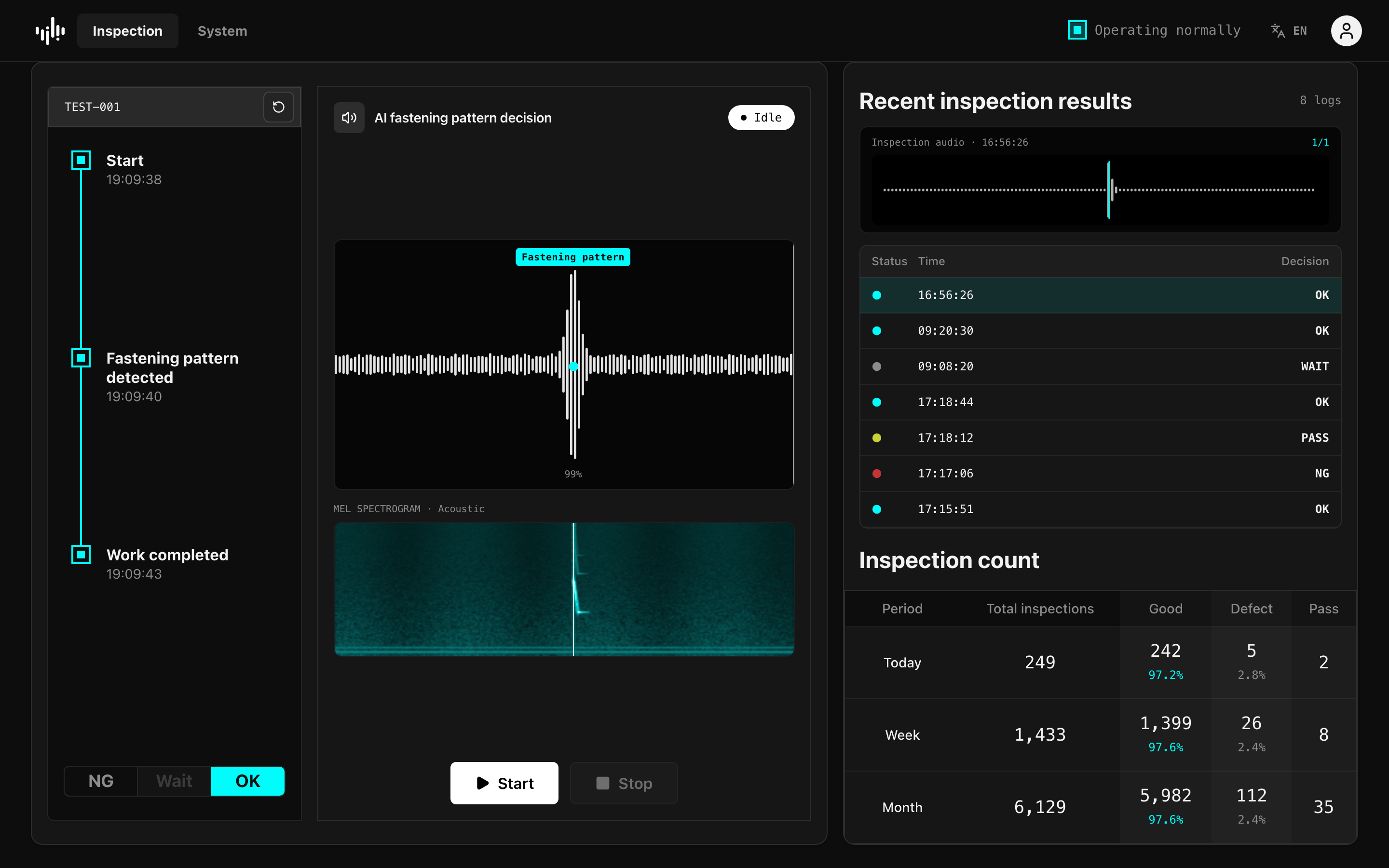
On-Premise Method
AI analysis is processed on the central analysis server, ensuring that data is not exposed externally, with advantages of low network costs and latency.

Product Type
Friction sounds, engine noises, abnormal noises, etc.
Product Components
Microphone, Central Analysis Server, Deeply Monitoring System
Monitoring Software
Provides Listen AI Monitoring System
Requirements
Scope of integration with on-site PLC/MES and external factory systems agreed in advance
Features and Benefits
- Powerful AI Analysis CapabilitiesWith significantly more powerful computational capabilities compared to edge analysis servers, we can apply more diverse and accurate AI analysis functions using large-scale AI models. The on-premise method is particularly suitable for building large-scale systems.
- Data Leakage PreventionUnlike other solutions, the on-premise method ensures that sound data is transmitted solely within the internal network and does not traverse the internet. Data collected through microphones is sent directly to the internal central server, guaranteeing it remains secure and protected from external exposure.
- Cost-Effective Network OperationsBy leveraging efficient data transmission with minimal network latency, this solution eliminates costs associated with transmitting sound data over the internet. This results in economical and optimized network operation.
Loading customer cases