Project overview
Listen AI learns the sound a motor makes when it spins after assembly and judges noise and defects automatically. When operators judge noise by ear, the standard differs from person to person, and judgment know-how can leave with a skilled inspector who retires. Deeply has deployed motor noise inspection at four sites
Field challenge
Repetitive listening inspection brought fatigue and inconsistent judgment. Inspectors had to hear similar motor sounds without missing any in a short time, and the longer the shift, the harder it was to keep the same standard
Defect judgments tended to come up relatively more often at night and early morning — a pattern common in shift work
It took a long time to pass skilled inspectors' judgment criteria on to new inspectors
Building an anechoic room to replace listening inspection would cost around KRW 100–200 million, and the room would have to be rebuilt every time the line moved
Customer tasks
- Move from operators' listening judgment to automatic rotation-sound judgment
- Unify inspector-by-inspector standards into one data-defined standard
- Inspect in-line without building an anechoic room or inspection booth
- Preserve skilled inspectors' judgment know-how as data
Site conditions and constraints
- Production line running in shifts
- In-line inspection position that allows only simple sound insulation, no anechoic room
- Internal motor defects that are hard to judge by vision because the part rotates
- Defects reflected more in the high-frequency band of sound than in low-frequency vibration
Deployment and system setup
- Microphone-based rotation-sound analysis
- Direct integration with the production-line PLC
- Redundant servers so inspection continues if one server fails
- Judgment from the rotation sound after power is applied to the motor
Results: what changes
| Item | Before | After |
|---|---|---|
| Judgment | Operator listening judgment | Automatic judgment from rotation sound |
| Standard | Varies by inspector | One consistent, data-defined standard |
| Environment | Requires building an anechoic room or booth (KRW 100–200 million) | In-line inspection with simple sound insulation |
| Defect detection | — | 82% reduction in motor defect rate |
Why sound
Why vibration falls short
Comparing vibration and sound on an automotive parts maker's motor cases showed that most defects appear more in the high-frequency band of sound than in low-frequency vibration. Vibration sensors alone can miss these abnormal cases
Why anechoic rooms and vision fall short
Building an anechoic room to replace listening inspection costs around KRW 100–200 million, and the room must be rebuilt whenever the line moves. Internal motor defects are often hard to judge by vision because the part rotates
Why sound works
Motor rotation sound carries a distinct frequency pattern for each defect type. Microphone-based analysis catches more abnormal cases than vibration and can be applied in-line at low cost, without an anechoic room
How we approach it
- Put judgment into words — interviews with skilled inspectors document the implicit judgment criteria
- Identify the telling segments — we listen to abnormal samples together and label where defects appear
- Cross-validate with the on-site laboratory — decibel (dB) measurements are cross-checked with the laboratory to make the criteria more reliable
- Train the model and keep monitoring — performance is watched after training and recalibrated when needed
Deployments
Automotive parts maker (motor noise)
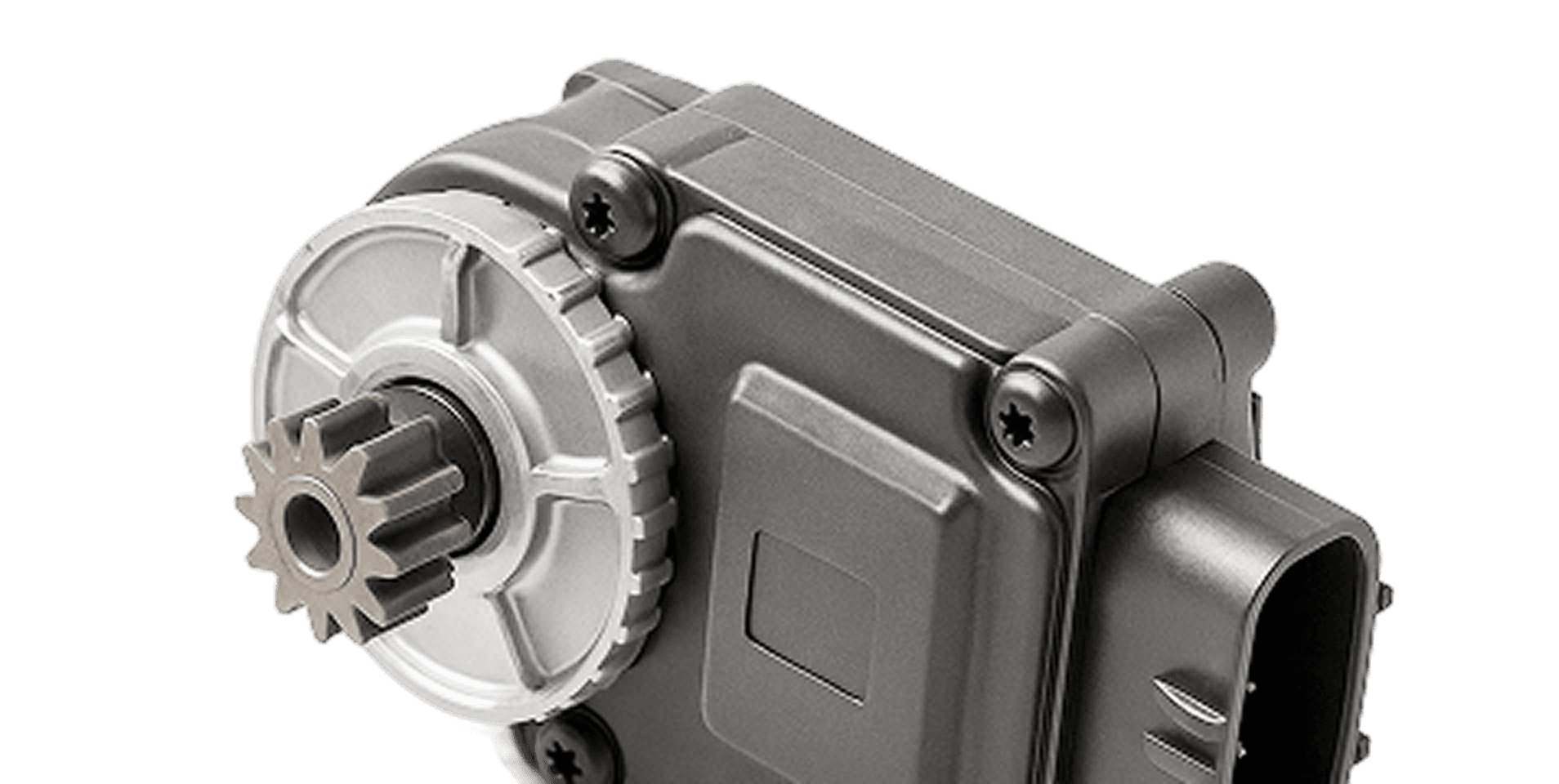
Applied to noise inspection of automotive motors and actuators. It connects directly to the production-line PLC, and redundant servers keep inspection running if one server fails
Overseas automotive parts maker
After power is applied to the motor, the rotation sound is used to judge whether it is abnormal
Questions before adoption
Our plant is loud. Will it still work?
How loud a site is and whether the target sound can be separated are different questions. With directional microphones and source separation, only the motor rotation sound is picked out even in high-noise environments
Can we operate and retrain it ourselves?
We aim to provide an operating model that allows retraining on site, and agree the scope and approach before adoption
Can it run on a closed network?
An edge setup that analyzes locally and sends only results can be considered, so applicability can be confirmed in secure environments with restricted external connectivity
Can we start on a small budget?
Microphone-based setups have low hardware costs, so you can validate with a small PoC first and expand afterwards
Does it integrate with existing MES, vision, and CMMS?
Passing results to existing systems can be considered, and there are cases of PLC integration
What happens after you contact us
- Site assessment — we check motor types, rotation conditions, and noise
- PoC — judgment accuracy is validated on a small line
- Validation — judgment criteria are agreed with the on-site laboratory
- Rollout — expansion proceeds line by line from the validated ones
Outcome summary
Measurement conditions and limitations
- Measurement conditions
- The vibration-versus-sound comparison was made on an automotive parts maker's motor cases. Judgment criteria were set by cross-validating decibel (dB) measurements with the on-site laboratory
- Limitations
- Judgment accuracy depends on motor type, rotation conditions, and line noise. Each site is confirmed with a PoC first, and judgment criteria are agreed afterwards
Published
Explore this case with AI
Send this page URL to a new conversation